This information is taken from the Program for Cooperative Cataloging site, hosted at the Library of Congress website: https://www.loc.gov/aba/pcc/naco/documents/PCC-SCT-Authority-Control-FAQs-Authors-Creators.pdf.
Authority Control FAQs for Authors and Creators
What is authority control?
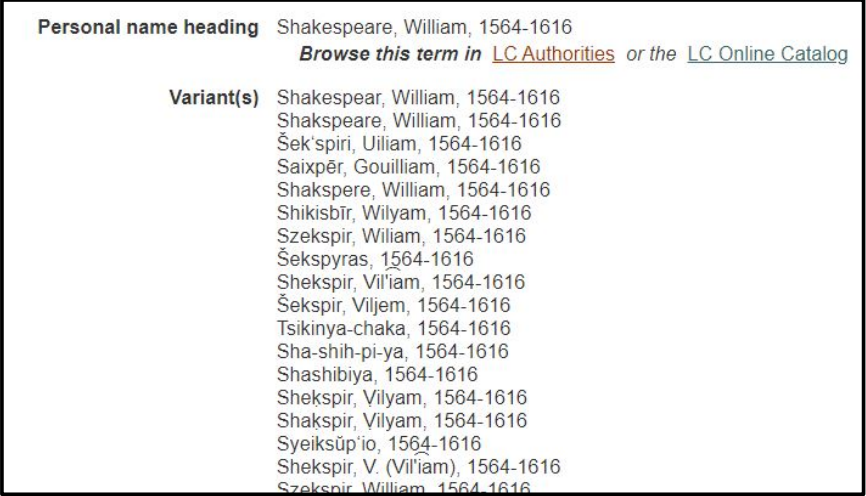
Authority control is a process that standardizes information to help library users find information. For example, instead of a library user needing to look up all the spelling variations used for Shakespeare in English and other languages, everything by and about Shakespeare can be found under the standardized form “Shakespeare, William, 1564-1616.” Librarians organize that
information in an authority record; take a look at the authority record for Shakespeare: https://lccn.loc.gov/n78095332.
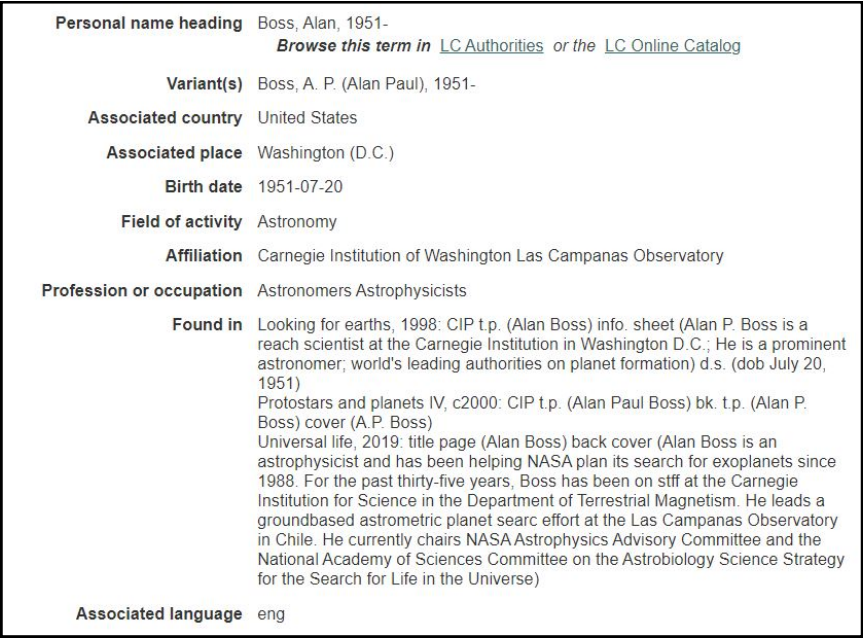
Librarians sometimes ask for information from creators (authors, artists, editors, etc.) to ensure that all the works created by an individual can be correctly attributed and easily found and collocated in library catalogs.
Why am I being asked for this information?
Libraries collect millions of resources from around the world. Sometimes creators can have similar names or the same name, and libraries need to find ways to distinguish one person from another.
When a librarian contacts you for information, they want to ensure that your work is correctly attributed to you and not to another person with a similar name.
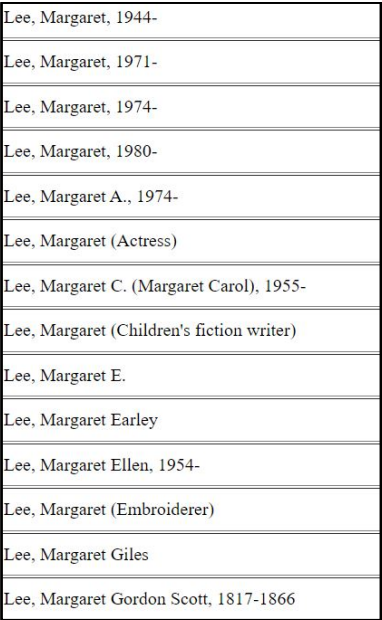
similar to or the same as “Margaret Lee”.
What information is most helpful to provide?
You can provide as much or as little information as you feel comfortable sharing. Some of the information that is most helpful to identify you is a middle name or initial, occupation or profession, and/or a birth date or year.
If you have created published works under different forms of names (either due to a name change or using pseudonyms), it can be helpful to let us know so we can work with you to explain options for the visibility of your names in association with your works.
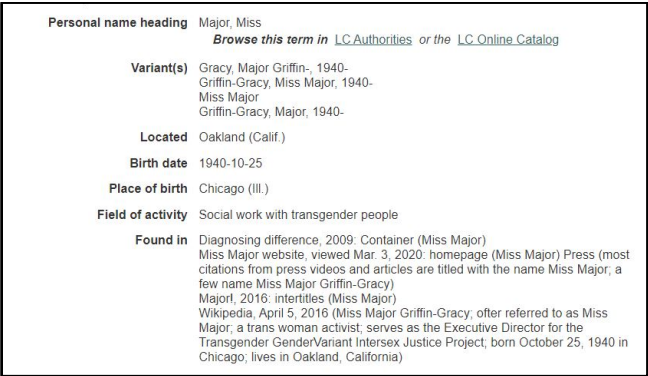
but did not publish under a previous name.
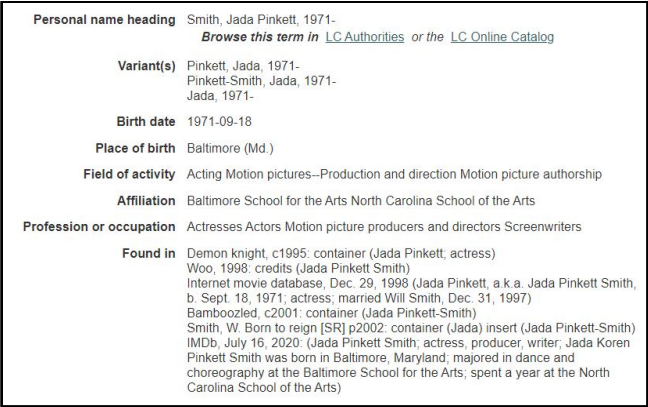
after creating published works under a previous name.
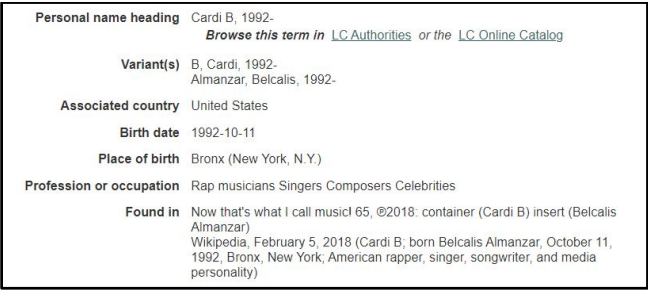
What will be done with this information?
The information provided will be collected in the Library of Congress/Name Authority Cooperative (NACO) Authority File, displayed in library catalogs, and shared openly throughout the Internet. In addition, many libraries, museums, and other institutions collect records from the LC/NACO Authority File in their own systems. You should be sure that you want to share this information publicly, because while it can be removed from the LC/NACO Authority File, we
cannot guarantee that all other sources that have used the information will also remove it.
What can I do if there is incorrect information in my record or if I would like information removed?
If there is inaccurate information in a record or information that should be removed, we want to correct it! You can contact naco@loc.gov to request a change, or contact a NACO institution. Please be patient with your request due to staffing limitations.
Information provided by the person identified in the authority record will be given precedence over information from other sources.
Library of Congress staff are only able to change items in the Library of Congress/NACO Authority File, not in authority files maintained by other national libraries. You will need to contact those libraries separately if you have concerns about an authority record that has been created by another national library.
Who can I contact for more information?
Find more information about the Name Authority Cooperative program at this page: https://www.loc.gov/aba/pcc/naco/about.html. For general questions about the program, contact naco@loc.gov.